
Do I Want These Thoughts? Navigating Internal Doubt in OCD
The doubt in OCD can extend beyond simple concerns about locked doors or turned-off stoves. People with OCD may experience doubts about their intentions, morality, or even their identity.

Disclaimer: This post discusses sensitive topics such as pedophilia-themed OCD (POCD). Please note that POCD is not the same as living with pedophilia disorder.
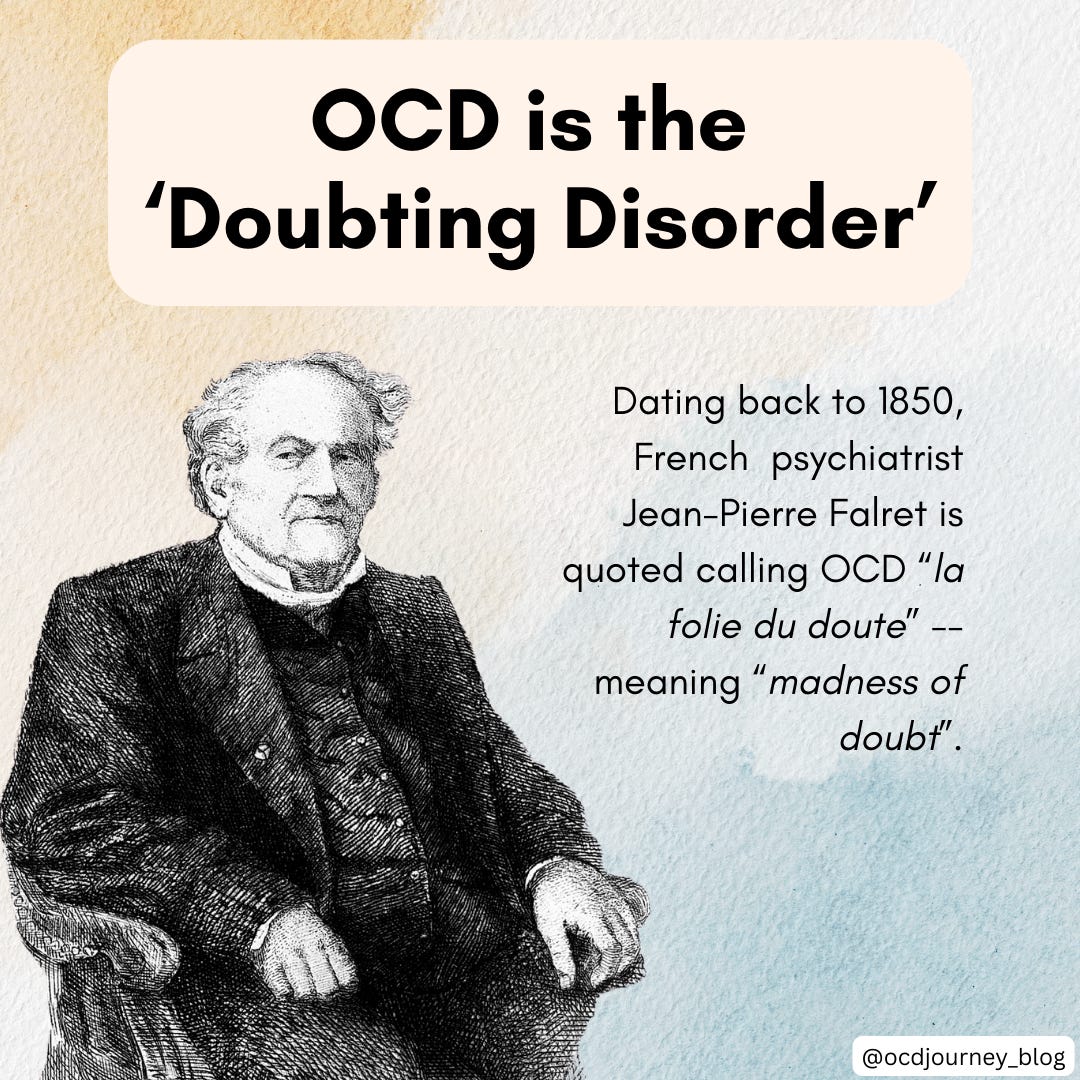
Obsessive-Compulsive Disorder (OCD) is often referred to as the 'doubting disorder' by the French as it is characterized by persistent, intrusive thoughts–or obsessions–and repetitive behaviors or mental acts–or compulsions–performed in response to these thoughts.
The doubt in OCD can extend beyond simple concerns about locked doors or turned-off stoves. People with OCD may experience doubts about their intentions, morality, or even their identity as individuals. For example, someone with OCD might obsessively question whether they have harmful intentions towards others, whether they are a good person, or even doubt their own memories or perceptions.
The intrusive thoughts and doubts that characterize OCD can be distressing and time-consuming, leading individuals to engage in compulsive behaviors as a way to alleviate anxiety or prevent a feared event. Despite knowing that their obsessions are irrational, individuals with OCD often find it difficult to control the compulsive behaviors.
Understanding OCD as the 'doubting disorder' reflects the pervasive and challenging nature of the condition, as it goes beyond concerns about external tasks and involves deep-seated doubts about one's own thoughts, intentions, and self-identity.
Understanding the Basics
The intrusive thoughts and doubts that characterize OCD are not fleeting worries but persistent and distressing mental intrusions. These thoughts can be incredibly time-consuming and emotionally draining. In an attempt to alleviate the anxiety provoked by these obsessions, individuals with OCD engage in compulsive behaviors. These behaviors may manifest as repetitive actions or mental rituals, performed with the hope of preventing a feared event or reducing the intensity of the intrusive thoughts.
The evolution of obsessions within OCD can be both intricate and distressing. Initially, obsessions may manifest as very specific fears, which can include concerns about harming others, fears of being a pedophile, worries about committing a sin, or doubts about being a good partner. These fears are intrusive and unwelcome, causing significant anxiety and discomfort for the individual experiencing them.
What makes OCD particularly challenging is the way these obsessions can morph over time. They don't necessarily stay confined to the initial specific topic. Instead, they can shift and take on a new dimension, introducing a layer of complexity to the individual's mental struggles. For instance, the focus may transition from the specific fear itself to a meta-concern – a worry about the mere presence of these distressing thoughts.
This shift is characterized by a growing preoccupation with the individual's own reaction to the intrusive thoughts. The person might start questioning whether the fact that they are having such thoughts means something about their character or intentions. It can lead to doubts about one's morality, identity, or even the fear of enjoying or wanting these distressing thoughts.
This shift represents a crucial aspect of OCD, highlighting how the disorder doesn't merely fixate on the external threat but also infiltrates the individual's internal world, making them question the nature of their own thoughts. The obsessions become more about the individual's interpretation and reaction to the thoughts rather than the initial content of the fears.
This internalization of obsessions contributes to the cyclical nature of OCD. The more the individual tries to push away or neutralize these intrusive thoughts, the more intense they can become. The fear of what these thoughts might mean about the person's character or identity becomes a source of heightened anxiety, feeding back into the obsessive cycle.
Understanding this evolution of obsessions underscores the complexity of OCD and emphasizes the importance of comprehensive and personalized therapeutic approaches. Treatment often involves not only addressing the specific fears but also working on changing the individual's relationship to their thoughts and developing healthier coping mechanisms to manage the anxiety associated with obsessions.
Doubts About Morality and Identity
In the context of OCD, the intrusive thoughts can become a catalyst for intense self-reflection and self-doubt. The individual may start questioning the very core of their moral compass, wondering whether the mere presence of such distressing thoughts signifies a flaw in their character or challenges their fundamental values. This doubt about morality can be particularly distressing, as individuals with OCD strive to align their actions and thoughts with their perceived moral standards.
Individuals grappling with OCD frequently experience a cognitive pattern characterized by black-and-white, or all-or-nothing thinking. This cognitive distortion involves perceiving situations, thoughts, and experiences in extreme terms, devoid of middle-ground nuances. For those with OCD, this thinking style magnifies the perceived severity of their fears and doubts, contributing to heightened anxiety.
The world becomes a dichotomy of absolutes, where actions are either entirely right or utterly wrong, thoughts are either entirely pure or inherently sinister. This rigid cognitive framework intensifies the challenges of managing obsessions and compulsions, as individuals may find themselves falling deeper and deeper down the rabbit hole of doubt and shame. Recognizing and addressing this cognitive distortion is a crucial aspect of therapeutic interventions, aiming to foster more flexible and nuanced thinking patterns for individuals navigating the complexities of OCD.
Identity, too, becomes a battleground for uncertainty. The individual may grapple with questions about who they truly are as a person. The intrusive thoughts create a crisis of self-definition, leading to an internal struggle to reconcile the perceived incongruity between the distressing thoughts and the individual's understanding of themselves. Someone might have an intrusive thought about hitting someone with their car, which in their eyes makes them a twisted and sinister individual. Another person might have a terrifying thought about children, making them believe that the mere presence of the thought makes them sick and evil.
Fear of Enjoyment or Desire
The fear that individuals with OCD may derive satisfaction or pleasure from their distressing thoughts represents a particularly challenging and perplexing aspect of the internalization process. It is important to note that this fear is often irrational and unwarranted, as individuals with OCD typically experience intense distress and discomfort due to their intrusive thoughts.
Nevertheless, the mere possibility of deriving any form of satisfaction or pleasure from these distressing thoughts becomes a significant source of distress in itself. This paradoxical anxiety adds another layer to the complexity of OCD, highlighting how the disorder can distort an individual's perception of their own intentions and desires, fueling the perpetual cycle of doubt, anxiety, and compulsive behaviors.
Consider the case of an individual grappling with taboo sexual intrusive thoughts within the context of Obsessive-Compulsive Disorder OCD. The distressing nature of these intrusive thoughts can lead to a significant impact on the person's intimate life. Fearing that these taboo thoughts might intrude during moments of intimacy or pleasure, the individual may adopt a strategy of avoidance, abstaining from any form of sexual behavior. This decision is driven by the overwhelming concern that engaging in intimate activities could potentially trigger or confirm their worst fears.
The fear is not necessarily about the action itself but revolves around the possibility of the intrusive thoughts infiltrating the individual's mind during the intimate moments, further intensifying their anxiety. The avoidance behavior, though seemingly a protective measure, paradoxically becomes a compulsion in response to the obsessive fear of the intrusive thoughts. The person may believe that refraining from sexual activities will prevent the distressing thoughts from manifesting, providing a temporary sense of relief from the anxiety.
This avoidance strategy, however, is a double-edged sword, as it not only limits the individual's ability to engage in a fulfilling and healthy aspect of human experience but also reinforces the power of the intrusive thoughts. The fear that the thoughts might confirm their worst fears becomes a self-fulfilling prophecy, perpetuating the cycle of avoidance, anxiety, and obsessive-compulsive behaviors.
Conclusion
Delving into the intricate realm of Obsessive-Compulsive Disorder (OCD) highlights the journey from specific fears to internalized doubts, reflecting the profound challenges individuals face. The evolution of obsessions showcases the intricate interplay between the external and internal dimensions of this 'doubting disorder.' The fear of deriving satisfaction from distressing thoughts becomes a poignant example of how OCD can distort perceptions and intensify anxiety. The rigid cognitive patterns, marked by all-or-nothing thinking, further complicate the landscape, magnifying the severity of fears and doubts.
As individuals grapple with questions about morality, identity, and the fear of enjoying or wanting distressing thoughts, the cyclical nature of OCD comes into focus. The internalization of obsessions, marked by avoidance strategies, reflects the paradoxical challenges faced by those navigating this complex mental health condition. Recognizing the multifaceted nature of OCD is paramount in fostering understanding, empathy, and effective therapeutic interventions. By dismantling stigmas and embracing nuanced perspectives, we can collectively contribute to a more compassionate approach to supporting individuals on their journey to manage and overcome OCD.
Very well written and insightful. Thank you!